
Mobile Gaming in 2026: What “Console-Level” Graphics Really Means
Last updated:
Checked 29 August 2026. Device availability, operating systems, game ports and regional features can change.
“Console-level graphics” is marketing shorthand, not a technical category. Modern phones can run sophisticated shaders, high-resolution assets and ports of games associated with consoles, but performance also depends on sustained cooling, battery limits, controls, storage and the exact software build.
Two current 2026 hardware examples
Apple iPhone 17 Pro
Apple’s current iPhone 17 Pro page lists the A19 Pro chip, a vapor-chamber thermal design and ProMotion displays up to 120 Hz in 6.3-inch and 6.9-inch sizes. The page presents those features as Apple specifications and claims; they do not establish a universal gaming frame rate. The model page references iOS 26, while Apple’s broader iPhone site previews newer software, so game compatibility should be checked against the installed version.
Samsung Galaxy S26 Ultra
Samsung’s US Galaxy S26 Ultra page lists a 6.9-inch display and an updated processor, with company claims about CPU, GPU and NPU gains. It also advertises up to 31 hours of video playback and a fast-charging figure under stated laboratory conditions. Video playback is not a gaming battery benchmark, and regional chip or feature details should be confirmed on the local product page.
What phone hardware can do—and what limits it
| Capability | Why it matters | Important limit |
|---|---|---|
| Hardware-accelerated graphics features | More complex lighting and effects | Developer implementation and chip support vary |
| High-refresh display | Smoother motion when the game outputs enough frames | Higher refresh can increase power use |
| Fast storage | Shorter loads and asset streaming | Large games consume substantial space |
| Vapor chamber or heat spreader | Moves heat away from the chip | A thin phone still has a limited thermal envelope |
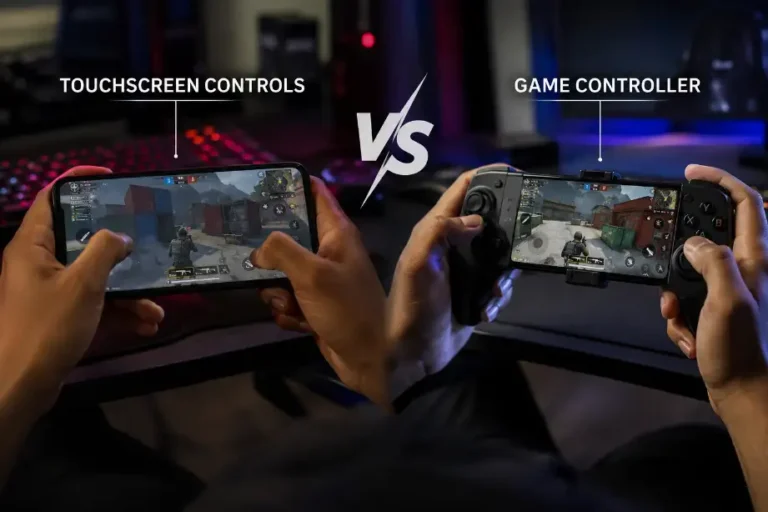
| External controller support | More precise physical inputs in supported games | Support and button mapping are game-specific |
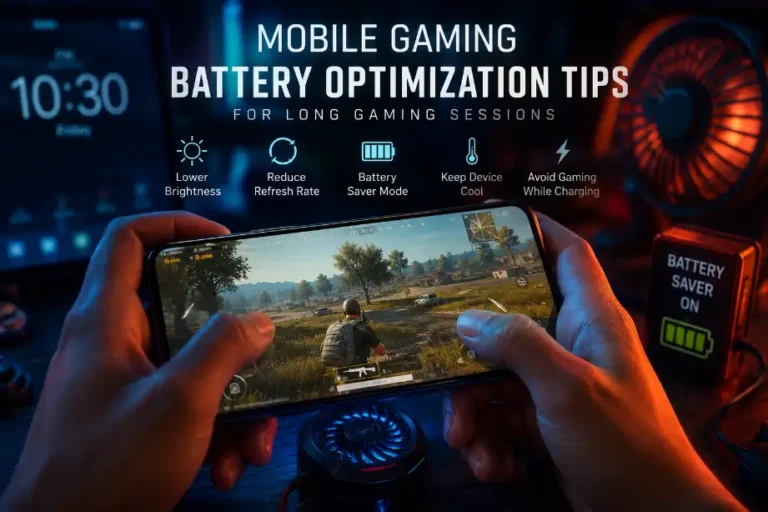
A phone may deliver a brief high-performance burst and then reduce clocks as temperature rises. Case design, room temperature, charging and screen brightness change the thermal situation. That makes a controlled sustained test more informative than a short launch benchmark. Our battery and heat guide explains safer ways to extend a session.
Software support matters more than peak specifications
A console or PC port needs more than capable silicon: the developer must ship it for the device, maintain it across operating-system updates and adapt input, text and memory use. Store availability can differ by region and device. Before buying a phone for one title, verify the current store listing, required OS, supported models, storage size, controller support and whether an internet connection is needed.
How to judge a graphics claim
- Name the exact phone, chip, OS, game version, graphics preset and resolution or scaling mode.
- Separate a manufacturer’s specification from an independent measurement.
- Test a sustained 20–30 minute scene and note heat, throttling, battery change and frame-time stability.
- Compare the same game build and settings; visual similarity does not mean identical resolution or effects.
- Include touch and controller usability, not only image quality.
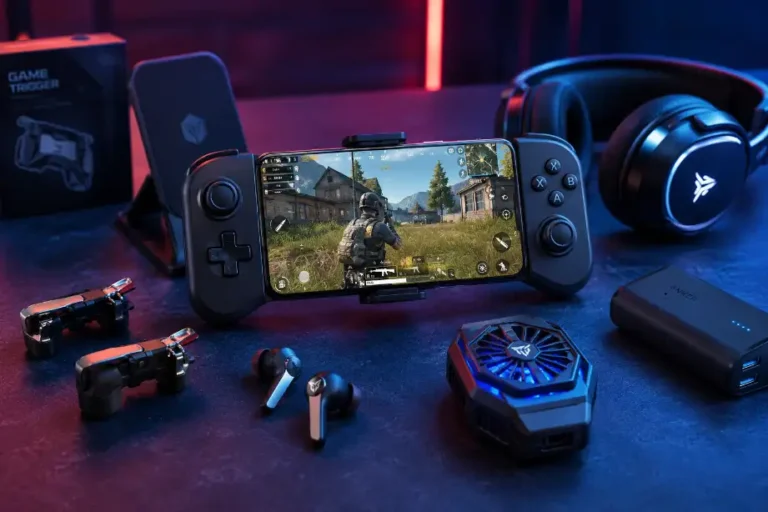
For supported physical controls and platform differences, see controllers versus touchscreen input. Players choosing grips, power accessories or audio should also start with our mobile accessory compatibility guide.
A better conclusion than “console replacement”
Current flagship phones can deliver visually ambitious games in a pocket-sized device. They do not reproduce every console’s sustained power, controls, library or living-room ergonomics. The useful question is whether a named phone runs the games you want, for the session length and control method you prefer, without unacceptable heat, battery drain or cost.