How Mobile Game Controllers Compare to Touchscreen Controls
Last updated:
Checked 29 August 2026. Input support and mappings vary by game, phone, operating system and controller firmware.
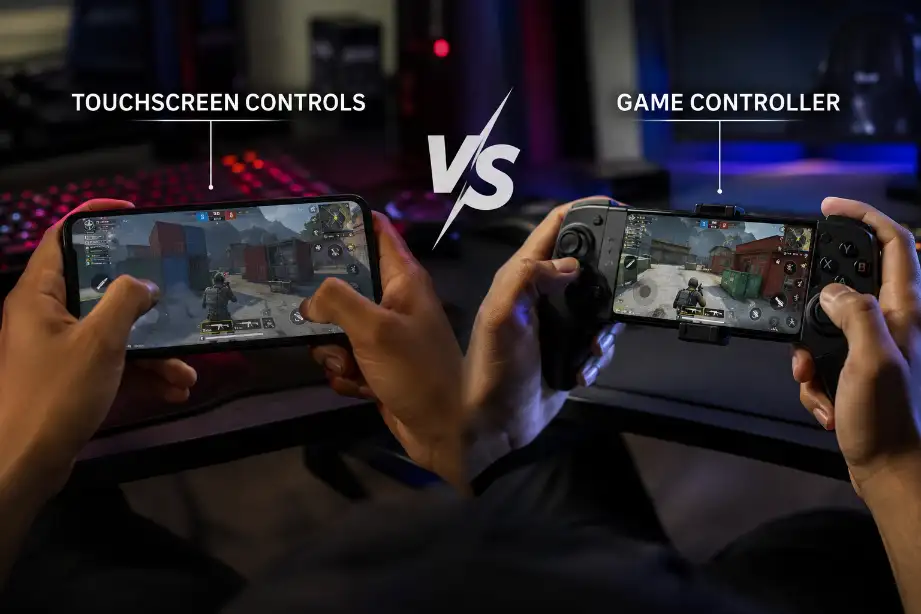
A controller is not always better than a touchscreen. Physical controls offer tactile reference and simultaneous inputs; touch controls are always with the phone and can be designed specifically for direct aiming or gestures. The right choice depends on the game and the player.
Where each input method is strongest
| Factor | Touchscreen | Controller |
|---|---|---|
| Availability | Built into every phone | Must be carried, charged or connected |
| Tactile feedback | Limited to vibration/haptics | Physical sticks, triggers and buttons |
| Screen space | Controls can cover the view | Hands stay away from most of the display |
| Customization | Game-dependent layout and size | Game- and platform-dependent remapping |
| Genre fit | Direct taps, swipes, many strategy and rhythm interfaces | Platformers, racing, action and familiar console layouts |
| Accessibility | One-handed and custom touch layouts may help | Adaptive hardware and physical remapping may help |
Support must be verified per game
Apple supports many Xbox, PlayStation and compatible Bluetooth controllers, and its support page also describes wired USB connections for supported hardware. Android’s controller documentation covers standard mappings and newer inputs such as haptics, lightbars and motion sensors. Platform support does not guarantee that a particular game recognizes every button.
Check the current store listing or in-game settings for controller support. Then test menus, gameplay, pause screens, remapping, analog triggers and reconnect behavior. Some titles accept a controller during play but still require touch for login or inventory screens.
Understanding latency without invented numbers
Input latency is a chain: controller scan, wired or wireless transport, operating-system handling, game simulation, frame rendering and display refresh. A direct connection can remove some wireless variability, but no controller has literally zero latency. Bluetooth performance also depends on interference and firmware. Apple advises updating devices and reducing the number of connected Bluetooth accessories when troubleshooting.
Touch input has its own scan and processing path. A 120 Hz display does not prove that the touch system or game updates at 120 Hz. Compare both methods in the same game version, scene and frame-rate mode if response is important.
Comfort and accessibility
Touch controls can support scalable buttons, left-handed layouts and direct gestures, while prolonged gripping of a flat phone may be tiring. Controllers add weight and require a viewing position, but physical controls can reduce visual searching. Neither is universally more accessible. Players should look for remapping, hold-versus-toggle options, sensitivity, dead-zone controls, haptic settings and one-handed alternatives.
A practical choice by use case
- Use touch when portability matters, the game was designed around taps or swipes, or a short session does not justify extra hardware.
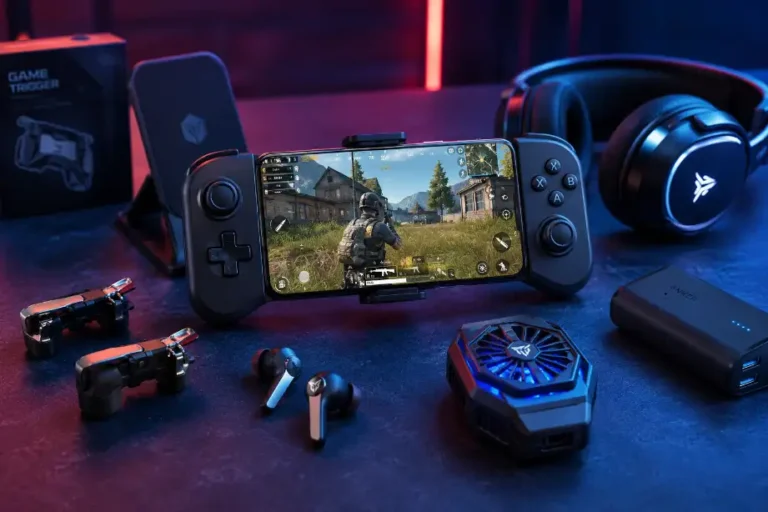
- Use a controller when the game documents full support and simultaneous movement, camera and trigger inputs matter.
- Consider both: touch for menus and casual play, controller for longer supported sessions.
- Before buying, use the fit and charging checklist in our mobile accessories guide.
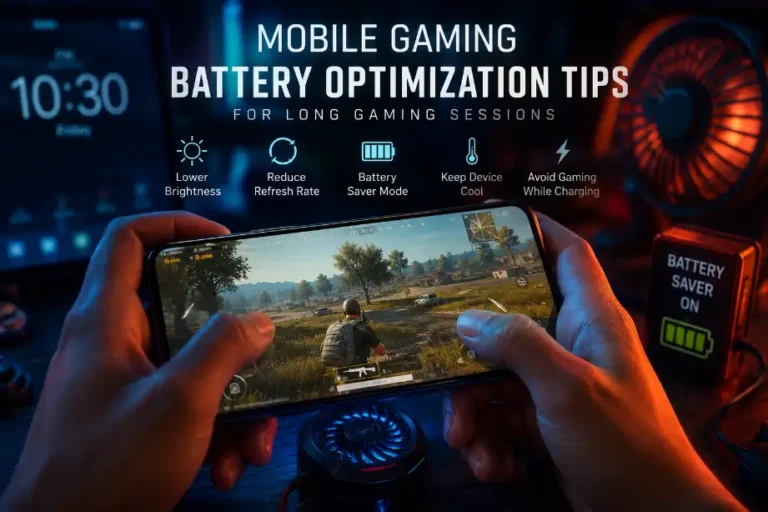
Longer controller sessions can also change power and heat behavior, especially while charging. Follow our battery optimization guidance rather than relying on universal charging rules.