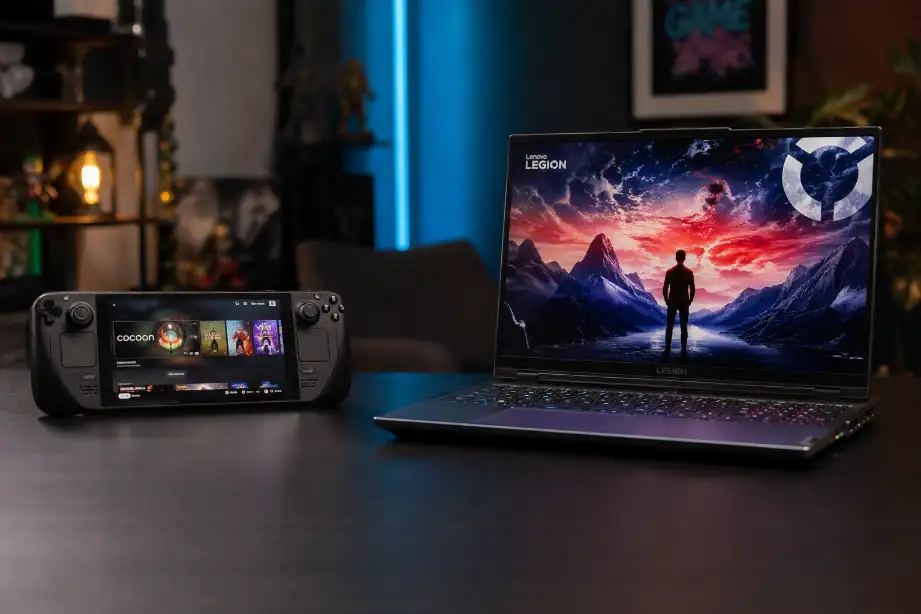
Portable Gaming Consoles vs Gaming Laptops: Cost and Use Cases
Last updated:
US prices checked 29 August 2026 before tax and promotions. Regional prices and configurations change.
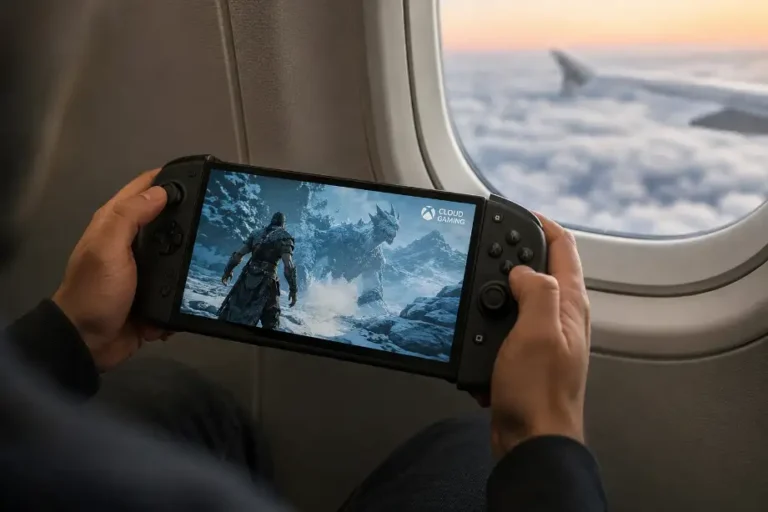
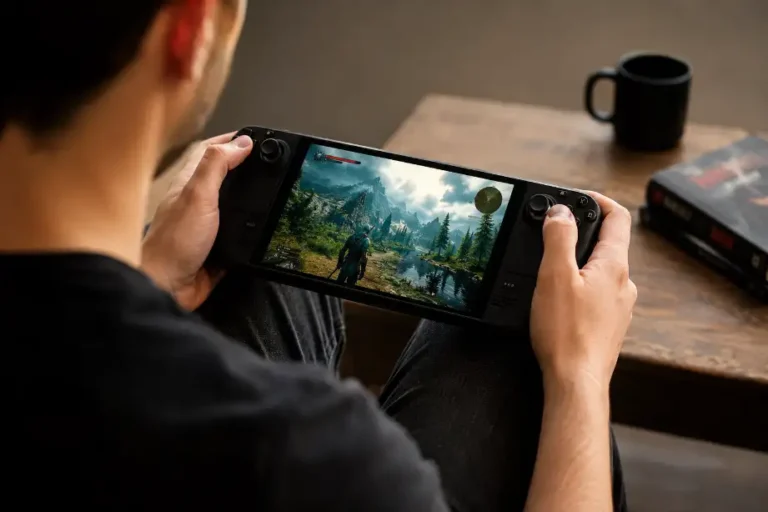
“Better value” depends on the games and work you need from the device. A console emphasizes a controlled library and simple setup; a Windows handheld offers PC stores in a compact shape; a gaming laptop adds a keyboard, larger display and wider upgrade and work options.
Three named purchase scenarios
| Scenario | Observed official US price context | What the price buys |
|---|---|---|
| Nintendo Switch 2 system | $449.99 through 31 August 2026; Nintendo announced $499.99 from 1 September 2026 | Closed console ecosystem, detachable controls and docked/handheld use |
| ROG Xbox Ally X (2025, 1 TB) | $999.99 on the ASUS US listing | Windows handheld with 80 Wh battery and replaceable M.2 2280 SSD |
| ROG Zephyrus G14 (2026 configuration) | $3,599.99 for the cited US configuration | 14-inch Windows laptop with discrete RTX 5070 Ti Laptop GPU |
These are examples, not category averages. Sales, refurbished devices and lower-spec laptops can change the result. Compare the exact RAM, storage, GPU and warranty—not only the product family name.
Ownership and maintenance
Console games are designed for a smaller set of hardware, which can reduce configuration work. A PC library may survive across multiple Windows devices, but launchers, drivers and anti-cheat introduce maintenance. Laptop RAM or GPU components may be soldered even when storage is replaceable; a handheld’s serviceability also varies by model.
Battery and longevity
A larger price does not guarantee longer battery life. High-performance laptop modes can require a substantial charger, while a handheld may lower power limits to extend play. Battery capacity declines with age in every category. Longevity depends on repair parts, software support and whether future games match the hardware—not a fixed number of years.
Choose by the complete job
- Choose a console when its exclusive library, local multiplayer and low setup overhead matter most.
- Choose a handheld PC when PC libraries and portability matter more than screen and keyboard size.
- Choose a gaming laptop when the same purchase must support work, creation or games needing a larger display and discrete GPU.
For physical travel constraints, see our portable-device comparison. For operating-system and compatibility differences, use our handheld-PC guide.